
How Fire Adjusters Calculate Compensation: What You Need to Know
FOR HOMEOWNERS
Free Recovery Support
WHO IT'S FOR
Want to understand the process before talking to adjusters or contractors
Just had a fire and don't know where to start
Have a question and want an honest answer
or a second opinion before signing anything
WHAT YOU GET
A Free Call With a Real Person
Location-Based House Fire Recovery Guide & Checklist
The Right Questions to Ask Adjusters & Contractors
Rebuild, Restore, or Sell — Your Options Explained
3,500+ fires navigated · BBB Accredited · Featured in Forbes & Realtor.com
No pressure. No cost. Just a clear next step.

Written By: Louis Swan
Updated: Jan 30, 2026

Edited By: Erik Russo
Updated: Jan 30, 2026
Your payout isn’t random — it’s calculated. Here’s how fire adjusters total up damage, depreciation, and policy limits so you can spot low estimates and protect your settlement.
Quick Takeaways:
- Fire claim payouts are based on your policy terms, limits, deductibles, and what’s covered.
- Adjusters use photos, inspections, and estimates to price repairs and personal property losses.
- Depreciation and valuation method (ACV vs. replacement cost) can change the payout a lot.
- Detailed documentation and accurate inventories help prevent undervalued estimates.

Had a House Fire? Get a Clear Path Forward
We've Helped 3,500+ Owners Like You
Had a House Fire?
We will get back to you as soon as possible.
Please try again later.
Disclaimer: Any estimates, tools, calculators, quizzes, guides, or educational content provided by House Fire Solutions are for informational purposes only. Results are not guarantees, offers, or professional opinions. Actual insurance payouts, restoration costs, timelines, and outcomes vary based on policy language, coverage limits, property conditions, local regulations, contractors, and insurer practices. Homeowners are solely responsible for verifying all information and making their own decisions. House Fire Solutions does not provide legal advice, insurance advice, or claims representation. Homeowners should independently verify information and consult qualified professionals before taking action.
That first settlement offer from the insurance company can feel like a second disaster, leaving you to question how it could possibly cover the cost to rebuild your life. You are right to be skeptical; their adjuster works to protect their bottom line, not your family.
A public fire adjuster is the licensed professional who legally represents your financial interests, becoming your most critical advocate in the overwhelming weeks and months ahead. They are dedicated to ensuring you receive the full and fair compensation you are owed.
This expert thoroughly documents every charred beam and piece of smoke-damaged furniture, creating a detailed "scope of loss" that accounts for damage you cannot even see. They understand how to properly evaluate the hidden consequences of fire, soot, and water that insurance adjusters often overlook.
Your advocate will also decipher the complex language of your policy, uncovering every benefit you are entitled to, from structural repairs to your personal property. They know how to accurately calculate the Additional Living Expenses (ALE) you need to maintain your life while displaced from your home.
Gaining control over your claim means understanding the difference between Replacement Cost Value (RCV) and Actual Cash Value (ACV). This knowledge is the key to challenging the unfair depreciation tactics insurance companies use to undervalue your settlement.
While your adjuster focuses on securing the funds for your recovery, specialized partners like House Fire Solutions can manage the physical logistics. We handle the careful contents pack-out and moving of your salvageable belongings, easing one of the many burdens you face.
Arming yourself with this knowledge transforms uncertainty into empowerment. Understanding the exact methods used to build a powerful claim is the first step toward securing the resources you need to truly begin again.
What Fire Adjusters Are And How They Serve Your Interests
In the chaos after a fire, your phone will ring constantly, and you'll hear the word "adjuster" from everyone. Standing in that smoky doorway, wondering what's salvageable, it’s hard to know who you can actually trust.
A
fire adjuster is a professional who investigates an insurance claim, but their allegiance is the single most important factor in your recovery. Understanding this difference is the first step toward taking control of your claim and protecting your family’s financial future.
The Three Types Of Fire Adjusters And Which One Works For You
Not all adjusters are the same, and understanding who works for whom is critical as you explore the first few weeks of your claim. You will encounter three types, but only one is your dedicated advocate.
- Company Adjusters (Staff Adjusters): This is the adjuster employed by your insurance company. Their job is to investigate the fire loss on behalf of their employer, and their primary loyalty is to the insurance company's bottom line
- Independent Adjusters: Don't let the name mislead you; these are third-party contractors hired by insurance companies during busy times, like after a natural disaster. They are paid by and work for the insurance company, meaning their interests are aligned with the insurer, not you.
- Public Adjusters: This is the only type of adjuster who works exclusively for you, the policyholder. A public adjuster is a licensed professional you hire to manage your claim, advocate for your interests, and fight for the maximum settlement you are entitled to.
How Fire Adjusters Differ From Insurance Company Representatives
The fundamental difference between a fire adjuster and a general insurance adjuster lies in who they serve. The adjuster sent by your insurance company is there to assess the damage and determine the amount their company is obligated to pay, aiming to close the claim efficiently.
A public adjuster approaches the claim entirely from your perspective, becoming your voice in the process. They conduct their own exhaustive investigation, documenting everything from structural damage to the hidden effects of smoke, soot, and water from firefighting efforts.
They analyze your policy to find every piece of coverage you're entitled to—like funds for temporary housing or debris removal—that you might not even know exists.
While the company representative manages the claim for the insurer, your public adjuster handles the overwhelming burden for you. They compile the painstaking room-by-room inventory of your lost belongings and prepare all the documentation needed to prove your loss.
When To Engage A Fire Adjuster In Your Claim Process
The best time for hiring a professional fire adjuster is immediately after the fire, right after you’ve notified your insurance carrier. The first 72 hours are critical, and decisions made under the extreme stress of displacement can have devastating financial consequences.
Bringing in an expert from day one ensures your claim starts on the right foundation. They can guide you through the initial recorded statement with the insurance company and begin documenting the loss before evidence is disturbed or cleaned away.
While you focus on your family's immediate needs—finding a place to sleep, buying clothes, and processing the shock—your public adjuster takes on the immense burden of the claim. They handle the paperwork, deadlines, and
disputes that often arise in fire insurance claims, freeing you from the decision fatigue that defines fire recovery.
The Legal Authority And Credentials Fire Adjusters Must Possess
A public adjuster is more than a helpful guide; they are a licensed and regulated professional with the legal authority to represent you, often simplifying the process of deciding whether you need a lawyer for your fire claim. They must be licensed by your state's department of insurance, which requires passing rigorous exams and undergoing background checks.
This professional standing ensures they are qualified to interpret complex policy language and negotiate effectively on your behalf. Most public adjusters work on a contingency fee, meaning they are paid a small, agreed-upon percentage of the final settlement. They don't get paid unless you get paid.
This structure perfectly aligns their interests with yours—the more successful they are for you, the more they are compensated. In fact, studies show that policyholders who hire public adjusters often receive significantly higher settlements, making all the difference in your ability to fully and truly rebuild your home and life.
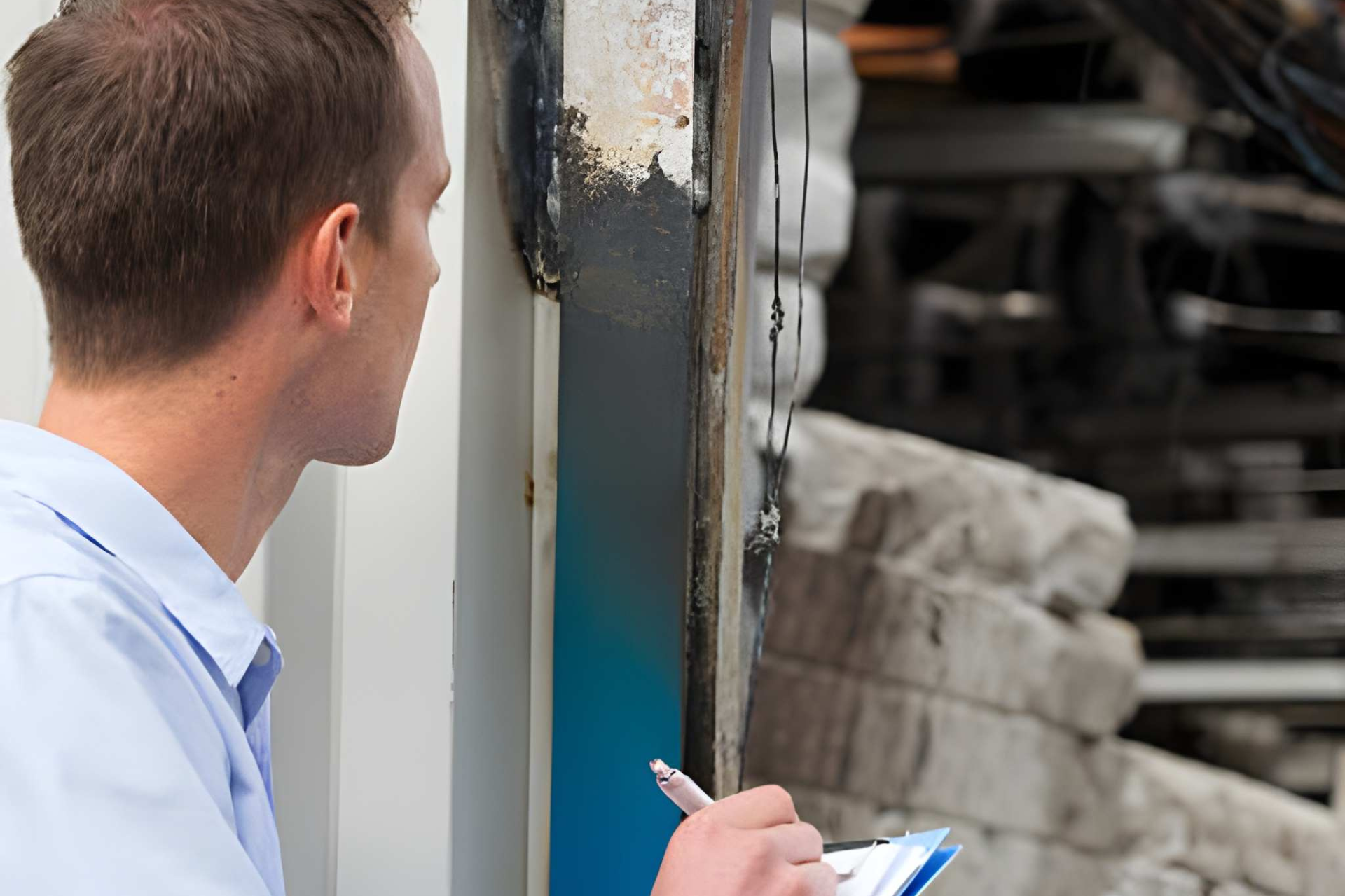
The Initial Fire Damage Assessment That Determines Your Compensation Foundation
I remember that first walk-through. Standing in a familiar room, now warped by heat and stained with soot, is where the abstract loss becomes painfully, tangibly real.
It’s an overwhelming moment, but for your
public adjuster, this is where the foundation of your financial recovery begins. This
initial assessment is the single most important phase in determining your
final compensation, and a thorough, expert-led inspection is your best defense against an undervalued settlement.
How Fire Adjusters Conduct Comprehensive Property Inspections
When your public adjuster arrives for that first inspection, they see more than destruction; they see the blueprint for your recovery. Their process is methodical, moving room by room to create a detailed document known as a "Scope of Loss."
This isn't a simple list of what's burned. It involves taking precise measurements of all affected spaces to calculate the exact materials needed for repairs, including:
- Square footage of drywall and insulation
- Linear feet of baseboards and trim
- Amount of flooring and paint required
- Crucially, they document the quality and grade of your home's original materials. Was your kitchen filled with custom cabinetry and granite countertops, or standard builder-grade finishes? This distinction is essential, as your policy likely entitles you to repairs of "like kind and quality," and an adjuster who misses these details is setting you up for a lowball offer.
The Hidden Damage Investigation Process Beyond Visible Fire Damage
The charred surfaces you can see are only part of the story. A skilled adjuster knows the most significant threats to your home's integrity are often hidden from view. Their fire investigation procedures go far beyond the obvious, checking for compromised structural beams in the attic and behind walls.
They understand that even a seemingly contained fire can generate enough heat to weaken wooden studs, warp metal, and damage electrical wiring, creating future hazards long after the rebuild is complete.
This thorough examination includes evaluating insulation, plumbing, and
HVAC systems for soot contamination, because ignoring this hidden damage doesn't just reduce your settlement; it risks leaving your family with an unsafe home.
Smoke, Soot, And Water Damage Evaluation Methods
A house fire attacks with three distinct forces: the flames, the extensive smoke and soot, and the water used to extinguish them. Your adjuster must be an expert in evaluating all three.
Smoke isn't just a bad smell; it's a toxic, corrosive substance that ruins electronics, textiles, and furniture from the inside out. Soot leaves behind an oily residue that requires specialized cleaning.
At the same time, the thousands of gallons of water from the fire hoses can cause devastating secondary damage, creating a high risk for dangerous mold growth if not addressed immediately. A detailed assessment ensures the costs for professional
smoke remediation and
water mitigation are fully included in your claim.
Creating The Damage Inventory That Becomes Your Compensation Blueprint
Alongside the structural assessment comes one of the most emotionally taxing parts of the process: creating a complete inventory of your damaged personal property. I know how gut-wrenching it is to put a price on a memory, but identifying items that are beyond repair due to smoke, fire, water, or other damage remains a critical step.
For every single item, from furniture down to kitchen utensils, the inventory must include details like its age, manufacturer, and original cost. Items are then categorized to distinguish items that can still be saved after a house fire from those that are non-restorable.
This detailed inventory becomes the blueprint for your personal property claim, serving as the primary evidence submitted to the insurance company. A precisely crafted inventory is the bedrock upon which a fair and complete settlement is built.
How Fire Adjusters Analyze Your Insurance Policy To Maximize Coverage
After a fire, that thick insurance policy you filed away is suddenly the most critical financial document you own. Trying to understand its dense legal language while grappling with the shock of losing your home can feel utterly overwhelming.
This is where a
public adjuster’s expertise becomes your lifeline. They are trained to read this complex contract not just for what it says, but for what it
means for your family's recovery, acting as your personal translator and strategist to secure the
maximum compensation you are rightfully owed.
The Clause-By-Clause Policy Review Process That Uncovers Hidden Benefits
While you focus on immediate needs and navigating your fire insurance claim, a skilled adjuster conducts a thorough, detailed analysis of your entire policy booklet. They hunt for endorsements and provisions that can dramatically increase your settlement.
For instance, they immediately look for an "Extended Replacement Cost" endorsement, which can boost your dwelling coverage by 20-50%—a lifesaver in today's volatile construction market. They also find clauses like "Inflation Guard," which automatically increases your limits to keep pace with rising costs.
This expert analysis also involves strategic thinking. An adjuster might argue that your wall-to-wall carpeting is part of the
dwelling (Coverage A), not personal property (Coverage C), freeing up funds if your contents limit is exhausted.
How Coverage Limits And Deductibles Impact Your Final Compensation
The Declarations Page of your policy is the first map of your financial recovery, outlining the maximums for each loss category.
- Coverage A: Dwelling (The structure of your home)
- Coverage B: Other Structures (Detached garages, sheds, fences)
- Coverage C: Personal Property (Every possession, from furniture to photos)
- Coverage D: Loss of Use (Your living expenses while displaced)
Your adjuster confirms these limits and factors in your deductible, but their work goes much deeper. They scrutinize the policy for sub-limits on items like jewelry or firearms, then find separate riders that provide the real coverage you paid for.
They also investigate clauses for
debris removal, ensuring those massive costs are paid
in addition to your rebuilding funds, not taken from them.
Additional Living Expenses Coverage Calculation During Displacement
Being forced from your home is profoundly disruptive. Your Additional Living Expenses (ALE) coverage is the crucial lifeline that helps you maintain a sense of normalcy.
A public adjuster ensures every single eligible expense is tracked and claimed, covering the difference between your normal living costs and your temporary post-fire costs. This goes far beyond just rent and includes things like:
- Boarding your pets
- The extra cost of restaurant meals if you lack a kitchen
- Laundry services
- Additional mileage if your temporary home is further from work or school
They help you create a detailed tracking system to preserve your family's standard of living, ensuring you are fully reimbursed while you can't be in your home.
The Policy Exclusions Review That Prevents Claim Denials
Knowing what your policy excludes is just as important as knowing what it covers. An adjuster proactively reviews the exclusions section to anticipate and counter potential reasons for denial.
One of the most critical areas is "Ordinance or Law" coverage. Standard policies often exclude the cost of bringing a home up to current building codes during reconstruction. If your home were 20 years old, you could face tens of thousands in out-of-pocket expenses for mandatory electrical and plumbing upgrades.
An adjuster finds this specific coverage and ensures the insurer pays for it, protecting you from a devastating financial surprise.
The Mathematical Methods Fire Adjusters Use To Calculate Your Compensation
After the smoke clears, the math begins. That first report from the insurance adjuster can land in your inbox like another blow—a spreadsheet of codes and numbers that feels impossible to understand when you're already exhausted.
This document, however, is the blueprint for your financial recovery. Understanding its language is crucial, and an expert partner translates this chaos into a clear, data-driven demand for the full compensation you need to rebuild your life.
Replacement Cost Value Calculation For Maximum Compensation Recovery
Your primary goal in a fire claim is securing the Replacement Cost Value (RCV). This isn't just an arbitrary number; it's the total amount required to repair or replace your damaged property with materials of like kind and quality at today's prices, with no deduction for age.
An experienced adjuster precisely calculates this figure by measuring every square foot of damage—from charred drywall to smoke-damaged flooring—and applying current, local costs for both materials and labor.
This estimate must also include
General Contractor Overhead and Profit (O&P), often called "10 and 10," which covers the non-negotiable cost of hiring a professional to manage your reconstruction. The RCV represents the true cost to make you whole again.
Actual Cash Value Determination And When It Applies To Your Claim
I need you to be prepared for the first check you receive from your insurance company, because it can be a shock. It will almost certainly be for the Actual Cash Value (ACV), and the amount may feel devastatingly low.
The calculation is based on a simple but powerful formula that has a huge impact on your immediate cash flow:
Replacement Cost Value (RCV) - Depreciation = Actual Cash Value (ACV)
This initial ACV payment is designed to give you immediate funds to start the recovery process, so don't panic. If you have RCV coverage, that depreciated amount isn't gone forever; it is "recoverable."
You receive that remaining money after you complete the repairs and provide proof of the expense, and a good adjuster will manage this two-part payment process to get every dollar you're entitled to.
How Depreciation Factors Are Applied To Different Property Categories
Depreciation is where many fire survivors lose thousands of dollars without realizing it. It’s the reduction in an item's value due to age and use, and insurance companies can apply it aggressively if left unchecked.
For instance, a 15-year-old roof on a 25-year shingle will be heavily depreciated. However, the structural lumber in your walls or your home's concrete foundation should depreciate very little, if at all.
An expert advocate scrutinizes the insurance company's depreciation schedule line by line, arguing against unfair depreciation on items with a long useful life and ensuring the age and condition of your belongings are assessed fairly.
The Cost Estimation Software And Industry Databases Adjusters Rely On
To fight a data-driven insurance company, you need to use the same data. Professional adjusters don't guess; they use powerful cost estimation software, and Xactimate is the undisputed industry standard.
This is the exact same program your insurance company uses, which immediately levels the playing field. Xactimate contains a massive, constantly updated database of material and labor costs specific to your exact zip code.
Your advocate uses this tool to build a detailed, line-item estimate for your entire loss, from the first nail to the last coat of paint, automatically calculating local taxes and all job components.
By speaking the insurer's language with the same data, your adjuster can defend their calculations with objective facts, making it nearly impossible for the insurance company to justify a lowball offer.
The Critical Factors That Increase Or Decrease Your Fire Damage Compensation
Watching your potential settlement number go up one day and down the next can feel like emotional whiplash. I remember that feeling all too well—a flicker of hope followed by a wave of despair.
That final number isn't set in stone; it’s a living figure shaped by factors that can either help or hurt your recovery. Understanding these variables is your best defense against an unfair settlement and your most powerful tool for rebuilding your life.
A skilled
public adjuster navigates this complex domain daily, turning potential liabilities into a more complete compensation package.
How Property Age And Pre-Existing Conditions Affect Compensation Calculations
The first thing an insurance adjuster will scrutinize isn't just the fire damage, but the condition of your home before the flames. This directly impacts the depreciation calculation, which determines the Actual Cash Value (ACV) of your property.
An older roof, worn carpeting, or faded paint will be assigned a lower value because they have less "useful life" remaining.
An aggressive adjuster might use this to apply excessive depreciation, but a public adjuster's job is to fight back. They provide evidence of upkeep and argue for a fair valuation, ensuring the insurance company doesn’t use a 20-year-old roof as an excuse to underpay for the brand-new one you are now forced to build.
Local Building Codes And Upgrade Requirements That Boost Your Settlement
Amidst the loss, there is one factor that can significantly increase your compensation, though it's often missed by homeowners. If your home was built years ago, it almost certainly doesn't meet today's stricter building codes for wiring, insulation, or structural safety.
Your town will require you to rebuild to these modern standards, and Ordinance or Law coverage in your policy pays for these mandatory, expensive upgrades. This isn't an automatic payment; your advocate must identify each required upgrade, price it, and prove to the insurer it's legally necessary.
This coverage alone can add tens of thousands of dollars to your settlement, giving you a safer, more resilient home than you had before.
Market Fluctuations In Materials And Labor Costs Impact On Your Claim
The price of rebuilding is not static, and a fire recovery timeline is long. The cost of lumber, drywall, and skilled labor can skyrocket between the day of your fire and the day construction eventually begins, especially after a widespread disaster.
An insurance company’s initial offer is often based on outdated pricing from months ago. A diligent public adjuster constantly monitors these market shifts and can demand that your claim be re-evaluated using current costs. This ensures your settlement reflects the real-world price of rebuilding
now, protecting you from a devastating budget shortfall halfway through construction.
The Documentation Quality That Strengthens Your Compensation Case
This feels like the cruelest task: being asked to remember and list every single thing you lost while you're still processing the trauma. Yet, the quality and thoroughness of your documentation is the most powerful tool you have.
A detailed home inventory, backed by photos, videos, and receipts, is the undeniable proof needed to get paid fairly for your personal property. Without it, an adjuster may offer a low standard rate or deny that part of your claim entirely. This documentation also proves you've met your policy obligations by:
- Mitigating Further Damage: Taking immediate action, like having a professional tarp the roof or board up windows, shows you have prevented more harm. Failing to do this can give the insurer a reason to deny claims for secondary damage from rain or vandalism.
- Comprehending Policy Sub-Limits: Most policies have payout caps on specific categories like jewelry, firearms, or art. A detailed inventory helps your adjuster structure the claim to maximize what you can recover within these frustratingly low limits.
Every receipt you can find and every photo you have from a past holiday strengthens your case. While you focus on your family, a professional contents inventory service like House Fire Solutions can take on this overwhelming task.
We document every lost item, ensuring nothing is overlooked so you have the powerful evidence needed to secure the compensation you truly deserve.
The Negotiation And Settlement Process That Finalizes Your Compensation
After months of documenting every lost item and getting repair estimates, you ultimately arrive at the negotiation table. I remember this part of my own recovery vividly—the knot in my stomach, a mix of hope and exhaustion, feeling so close to the finish line but knowing the final hurdles could be the highest.
This is where all your painstaking preparation pays off. The
negotiation and settlement process is a formal, strategic exchange where your
public adjuster advocates tirelessly to turn your detailed claim into the funds you need to rebuild your life.
How Fire Adjusters Present Your Compensation Demand To Insurance Companies
This process begins formally when your adjuster submits a thorough "Proof of Loss" document to the insurance company. This isn't just a number on a page; it's the complete, evidence-backed story of your loss, including detailed repair scopes, contractor estimates, personal property inventories, and temporary living expense calculations.
It serves as your official demand for payment under the terms of your policy. Your public adjuster presents this demand not as a request, but as a thoroughly documented statement of what is owed, prepared to defend every line item from the cost of drywall to the value of a smoke-damaged sofa.

The Counter-Offer Evaluation Process And Strategic Response Methods
It is extremely rare for an insurance company to accept the initial Proof of Loss without question. You should expect a counteroffer, and it will almost certainly be lower; seeing that first number can be disheartening, but dealing with underpaid fire insurance claims is a standard practice.
The insurance company's adjuster will have their own report, and the negotiation will focus on the discrepancies between the two. These disagreements often center on two key areas:
- Scope of Loss: The insurer may argue that certain items can be cleaned or repaired rather than replaced. Your adjuster will use expert reports, like those from industrial hygienists on smoke particle contamination, to prove why full replacement is necessary for a safe home.
- Unit Pricing: Both sides may use the same estimating software, like Xactimate, but arrive at different totals. Your adjuster will fight to ensure the pricing reflects current, local market rates for labor and materials, not outdated or national averages.
During this back-and-forth, your adjuster strategically responds to the insurer's points with facts and documentation. A common and key practice is for the insurance company to issue payment for the "undisputed amount" of the claim.
This allows you to begin essential repairs immediately while your adjuster continues to negotiate the remaining disputed items, so your recovery doesn't come to a complete standstill.
When Mediation Or Arbitration Becomes Necessary For Fair Resolution
What happens if you reach a stalemate and the two sides simply cannot agree on a fair value? You are not out of options, and this is not the time to give up hope.
Most insurance policies contain an "Appraisal" clause, a formal dispute resolution process that is less costly and time-consuming than a lawsuit. In Appraisal, both you and the insurance company hire your own independent, impartial appraiser to represent your side.
These two appraisers review all the evidence and attempt to agree on the amount of loss. If they cannot agree, they jointly select a neutral "umpire" who will review both positions and make a final, binding decision on the disputed amount, breaking the deadlock.
The Final Settlement Review Process That Protects Your Long-Term Interests
Once an agreement is reached, you will be asked to sign a final sworn Proof of Loss statement, officially closing the claim. Before you sign anything, your public adjuster will conduct a precise and detailed review of the final settlement documents to ensure they accurately reflect the agreement and protect your future.
One critical detail regarding your house fire insurance payout often surprises homeowners: settlement checks for the dwelling (your home's structure) will almost always be made out to both you and your mortgage lender.
The lender must endorse the check, and they will typically release the funds in stages as repair work is completed to protect their financial interest in the property.
Your adjuster will guide you through this final administrative hurdle. They will ensure you understand every step before you finalize the settlement that will serve as the financial foundation for your new beginning.
Frequently Asked Questions
How long does it typically take for a fire adjuster to calculate my compensation?
This is the question that keeps you up at night, and the honest answer is: it depends. The timeline hinges entirely on the scale of the damage you're facing.
For a smaller claim with contained smoke damage, an adjuster might finalize your compensation in just a few weeks. However, for a significant fire with structural damage or a total loss, the process is a marathon. It can easily take three to six months, or even longer, to get a final settlement.
This is because the adjuster must thoroughly document your lost property, wait for contractor bids to come in, and handle potential delays, like an official fire marshal investigation. While state regulations set deadlines for insurers to respond, the detailed work of calculating a fair settlement takes time.
Can I challenge a fire adjuster's compensation calculation if I disagree with it?
Absolutely. Remember, the insurance company's first settlement offer is just that—an offer, not the final word. You have the right to challenge any calculation you believe is inaccurate or incomplete.
Feeling overwhelmed by the thought of a dispute is normal, but you have options. The most effective path is often to hire your own public adjuster, an expert who works for you to build an independent estimate and negotiate on your behalf.
You can also gather competing bids from trusted contractors to dispute the insurer's repair pricing. If you can't reach an agreement, most policies include an "Appraisal Clause," a formal process for resolving disputes with independent appraisers.
What happens if my insurance company stops responding during the appeal process?
It’s incredibly common to find hidden damage weeks or even months after the fire. You might open a wall to find charred studs or discover that smoke has seeped into an area you thought was untouched.
When this happens, your adjuster files a "supplemental claim" to cover these newly discovered costs. A supplement can often be added even after an initial payment is made, as long as your claim isn't formally closed.
The key is to document that this new damage was a direct result of the original fire, so take photos and notify your adjuster immediately.
Do fire adjusters handle business interruption losses differently from property damage
Yes, the calculations for these two types of losses are completely different. It's crucial to understand how each is handled, especially if your home was also your place of business.
- Property Damage: This covers the physical loss. The calculation is based on the cost of materials and labor needed to repair or rebuild your structures and replace your contents and equipment.
• Business Interruption (BI):
This covers the income you lost. The adjuster will analyze your company's financial records—like profit and loss statements and tax returns—to project the net income your business lost during the "period of restoration." This can also include continuing operating expenses like payroll or rent.
How do fire adjusters calculate compensation for items with sentimental value?
This is one of the most painful realities of a fire claim. Standard insurance policies do not—and cannot—pay for the sentimental or emotional value of an item.
Irreplaceable things like family photos, children's artwork, or inherited letters are valued based on the cost of their physical materials (e.g., the cost of photo paper and ink).
An antique chair passed down through generations is valued simply as a "used chair." The only way to receive the true market value for high-value items like antiques or fine art is if they were appraised and insured separately on a "scheduled personal property" endorsement before the fire occurred.
Conclusion
Staring at that first insurance settlement offer can feel like a second gut punch after the fire itself. You now have the knowledge to fight for what you’re owed, turning you from a victim of circumstance into an advocate for your future.
Remember that the burden of proving your loss rests entirely on you. Your detailed documentation is the foundation of your entire fire insurance claim. To secure the fair compensation needed to rebuild, you must:
- Master the Vocabulary: Understand the critical difference between Replacement Cost Value (RCV) and Actual Cash Value (ACV). Don't be afraid to question every dollar of depreciation your adjuster applies to your life’s possessions.
- Build Your Case: Your detailed home inventory, photos of the damage, and any receipts you can find are your most powerful negotiation tools. They transform abstract loss into concrete proof.
- Challenge the Offer: You have the right to contest an undervalued settlement. Submitting your own estimates from independent contractors is often the most critical step in getting the funds you truly need.
Fighting this financial battle is a full-time job, one you’re forced to do while managing the heartbreaking reality of your home. You don’t have to handle the overwhelming physical recovery alone.
Specialized partners like House Fire Solutions can expertly manage the exhausting logistics of inventory, contents pack-out, and moving. We ensure your salvaged belongings are documented for your claim and treated with the care they deserve. This allows you to dedicate your strength to the financial negotiations that will define your recovery.
You have the tools and the right to secure your future—take each next step with the knowledge that you can and will get through this.